The Seed
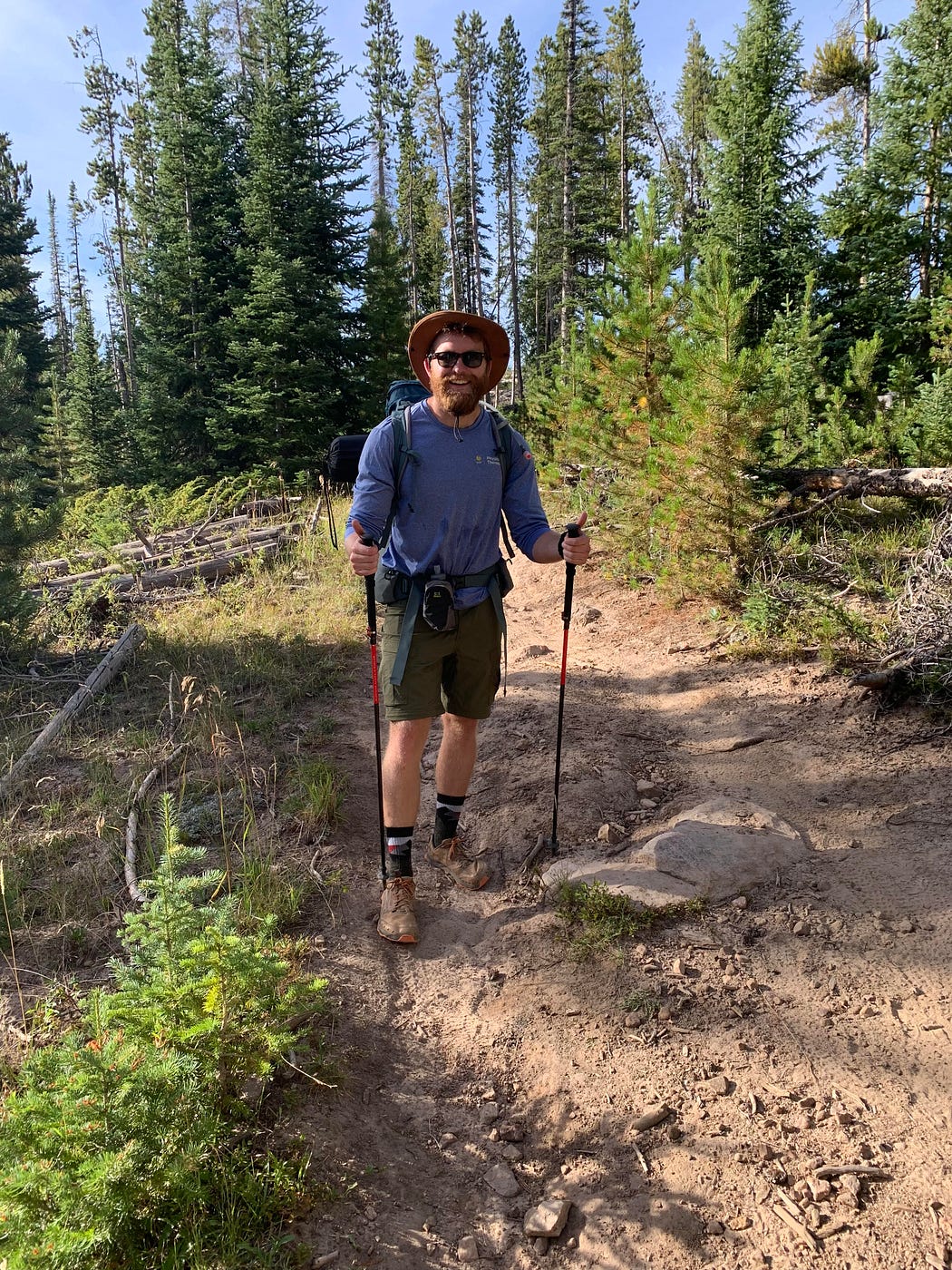
In May of this year, I made a big decision. I was unhappy with my job and how my career had started off since graduating from physical therapy school in 2020. I wanted a distraction. In fact, I felt a distraction was just what I needed at this point in my life. Some big side project that will take my mind off my career angst.
One of my friends had just done a week on the Appalachian Trail- he too was experiencing some early-career turbulence, and so he decided a week in the great outdoors would do him good. That was the inception of my idea- coupled with my lifelong desire for outdoor adventure, I quickly thought of the Colorado Trail and what it could offer me.
Soon thereafter, I had made up my mind. I didn’t want to just do a few days on the CT- I wanted to attempt the whole thing. All 486 miles of it.
A Tall Order?
Prior to this hike, my backpacking experience was basically zero. I had one brief experience, in December 2010, where I did two nights and three days on the Appalachian Trail with three others. To be honest, I don’t remember much about that experience, besides how cold it was and how stupid of an idea it was to backpack on the AT in December.
I do have a lot of camping experience, however. I’ve camped on-and-off my whole life; first with a handful of experiences on the West Coast, and then a handful more in the humid and muggy Florida environment. I moved to Colorado three years ago, and I’ve done a few different camping trips with friends. But nothing to the scale that I was attempting to do. I was planning for not just a few nights of backpacking, but 28. And I was going to be all alone.
Once I decided I would attempt to thru-hike the entire Colorado Trail, I had about a 3-month window to learn, plan, acquire the necessary gear, field test that gear, and think through all considerations for a project of this magnitude. The first thing I did right was read multiple blogs from people detailing their experiences on the Colorado Trail- how they prepared, what they brought, what they learned, everything. If you don’t know how to do something, find someone who’s done it, and learn from them.
Gear
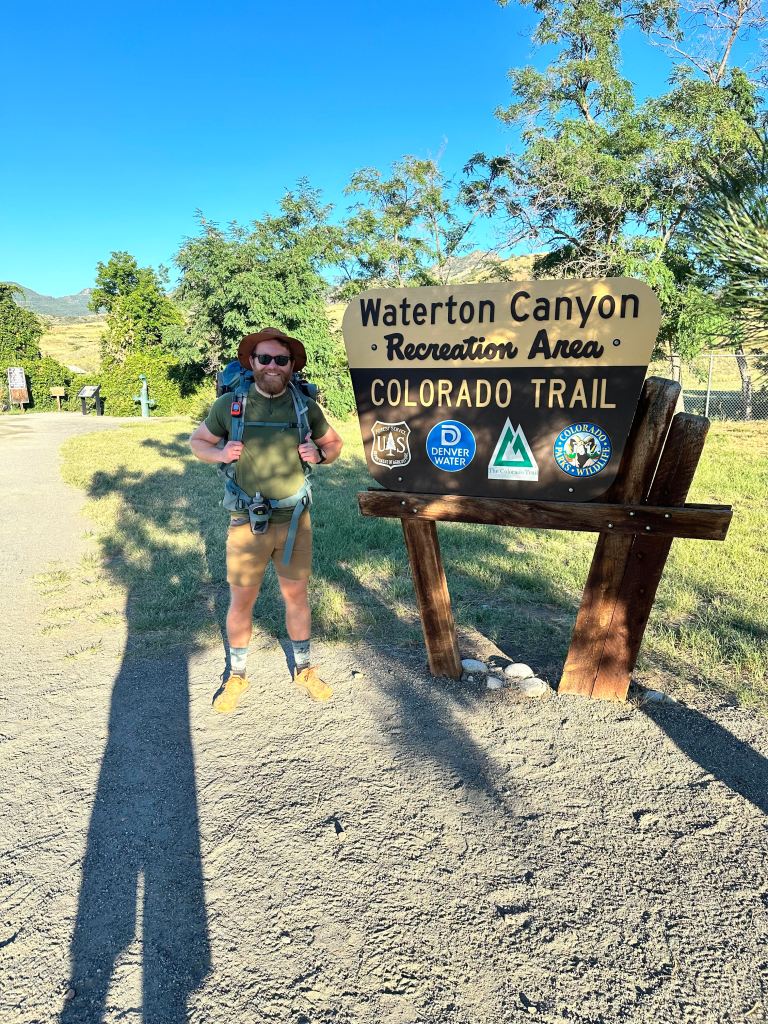
The gear part was mostly straightforward- there are the obvious ones that quickly jump to mind: backpack, tent, sleeping bag, sleeping pad, stove. Then there was everything else: hiking poles, water filter, dry sack for food, medical kit, satellite communicator for emergencies, sunscreen, bug spray, eating supplies, and guidebook.
Then, there’s the matter of clothing- this will entirely depend on the environment in which you’re hiking, as well as the time of year. For me, I was going to be hiking on this trail from mid-to-late-August, with most of the terrain being above 10,000 feet in altitude. This meant warm days with wet afternoons and cool nights and mornings.
With three months of planning allotted, I acquired all necessary gear incrementally, taking advantage of sales whenever I could. Even though the end price would be significant, I viewed all these purchases as an investment: this was only the beginning of my outdoor adventures, and I knew this gear would be put to use for years to come.
I got lucky with my backpack- a 65-liter plus 10-liter extension- when I stumbled into a warehouse sale that was jettisoning all of its on-hand gear before moving to a warehouse in another state. REI had a summer sale as well, which came in handy for the tent, sleeping bag, and sleeping pad. I was able to save a few hundred dollars from those purchases alone. The rest came over a handful of weeks, with me ordering new things once I realized I needed them.
To stay organized, I set up a table in the basement and laid everything out where I could easily catalog what I had. As the pile of stuff grew bigger, I added a second table at a 90-degree angle to the first, creating a large L-shaped pile of outdoor gear. How the hell was all of this supposed to fit in my backpack?!
I realized that this trek would go much better if I had not only an intimate understanding of my pack but also designated a specific place for everything to go. This way I wouldn’t waste time rummaging through the deep nether regions trying to find my teepee or hand sanitizer.
Food and Water
The hardest questions for me to answer regarded food and water. How much do I need to bring? Five days of food? Three days? 2 liters of water? Four liters? Again, I turned to the internet for answers.
With my planned hike being 28 days total, I knew I would have to resupply a few times along the way. The Colorado Trail website was a wonderful find; it has both a bigger, detailed guidebook of the CT that I used to learn about the trail prior to leaving, and it also has a more compact, but still detailed data book that gave me water sources and campsites at various mile markers along the trail.
After reading through those materials and alongside the information presented on the various blogs I read, I had a good idea of the towns that were close to the trail and the best ones to use for resupplying. My retired parents live in Colorado as well, and with free time to give, they agreed to meet me along the way. After discussing, we agreed that carrying five days’ worth of food at a time was the right amount for me- the mileage between towns seemed to be coverable over five days.
The “literature” on how much water to bring on your person for backpacking was a bit murkier. I couldn’t find any consensus, so I took a tally of the water containers I had and landed on: one 2.5-liter water bladder, a 20-ounce soft flask, and a 23-ounce water bottle. It was a bit of an arbitrary answer but it added up to a full gallon’s worth, and with the expected daily mileage I was going to do plus the frequency of water sources along the way, this amount seemed appropriate.
Once I knew how much food and water to bring, I needed to figure out what kind of food I wanted to take with me. My mind immediately jumped to the obvious- trail mix and Clif bars for snacking; oatmeal for breakfast; MRE’s for dinner. Soon thereafter I added tuna packets, peanut butter, and honey to the mix.
One thing I didn’t do a great job with was determining how my body would respond to eating this type of food day after day. I didn’t do a full day of eating like I should have. This would’ve told me that Clif bars probably weren’t the best choice; but hey, everything’s a big experiment, and there’s a lot to learn along the way.
How Heavy Should My Pack Be?
You may be asking yourself how much these packs should weigh. Once again I turned to the internet for answers, and from a few different sources I kept getting the same range: 10–20% of your body weight. I weigh in at 205, so that meant my range was about 20–40 pounds. I quickly realized that there was no way my pack would be near the 10% mark: after adding in my tent, water, other small items, and then five days of food, my pack was well into the 30’s already.
I did some tinkering. Once when the pack was 35 pounds I put it on just to see how it would feel. I buckled in the chest strap and waist belt and adjusted the shoulder straps to comfort. I did some pacing around the basement- it didn’t feel that bad! As soon as I did that, I knew that I could stretch the pack weight up to the 20% cap (~40 pounds) and it wouldn’t be too difficult.
Once that was settled, I knew I had to assemble everything and put it all in the pack to see where I stood. I packed the tent, MRE’s, and water bladder into the main compartment; smaller and looser items in the top compartment; water filter, stove, rain jacket, camp towel, and the rest of the food stowed away in the bottom compartment. All said, the pack weighed 43 pounds. Okay, the pack weight is settled then.
Preparing Your Body
Hiking for miles and miles every day is no joke. It is a specific activity that your body needs to adapt to and it is a demanding one. Lucky for me I do have a fair amount of experience covering several miles over mountainous terrain- living in Colorado has led me to do not only plenty of long day hikes but also a lot of trail runs. Last summer for a trail race I was able to 26 miles in the mountains in six hours.
I knew my body could handle the miles, but there were two things that concerned me: having the ability to do long hikes day after day and being able to do them while wearing 20% of my body weight.
With those two concerns in mind, I knew some amount of training would be necessary. I had already been hiking a fair amount in the months leading up to this trek; I just needed to do some hiking with the pack on. So that’s what I did.
I ended up hiking with my full pack on two different occasions- the first one being an 11-mile alpine hike in a full-on thunderstorm two weeks before leaving. I didn’t intend for the thunderstorm; I did see there was a chance of rain but I figured getting rained on would be good practice for the actual trail.
The second outing came about a week before leaving; I went out to a moderate-steep section of a nearby trail and went up and down a few times in an attempt to get used to hiking with the pack on harder terrain. All told, these two outings were definitely not enough. Given the daily mileage I was planning to attempt, I would have benefited from more training.
Know Your Limits
Okay, so I had all the big stuff figured out: how much food and water to bring, what gear was necessary, and the weight of my pack. But the last big question was: how many miles will I hike each day? Again, turning to the experience of others is a great place to start. Most sources I read said the average completion time on the Colorado Trail was 4–6 weeks. On a 486-mile trail that came out to 12–17 miles per day on average.
The other key number to pay attention to while figuring this part out is the amount of elevation change throughout- there’s a lot. Turns out that hiking through the Colorado Rockies is kinda steep…who would’ve known!
I like numbers. A lot. Outside of English, they are a language that I think in quite frequently, which means that I was salivating when confronted with the challenge of mapping out an expected day-to-day mileage and elevation itinerary.
I used the mapping tool on Strava to start playing around with different distances. Luckily the Colorado Trail had already been divided up into 28 different segments; I would have just done one segment per day, but unfortunately, there was a big variance between segments: the shortest being only 11 miles, and the longest topping out at 32 miles. No way was I going to try to hike 32 miles in one day. I would do that for one single, standalone day, but not within the context of a longer thru-hike like this one.
However, I could still use the segments as a rough guide to follow. (Each segment begins and ends at a trailhead, sometimes with a parking lot, sometimes with bathrooms.) Coupling that with the guidebook information for established campsites and water sources, I could start to figure out the best places to set up shop for the night.
Breckenridge was the first major town along the trail, and it was 104 miles away from the start. If I were to carry five days’ worth of food with me, that meant I had to get there in five days. Aka, I was going to do 21-mile days to start the hike. My line of thinking went something like this: it was going to be the first section of the trail, therefore I would be the most energized! 21-mile days should be no problem!
Once Breckenridge was planned, I found the other towns I would stop through along the way: Twin Lakes, Monarch Pass, Creede, Molas Lake Campground, and finally, Durango- the southern terminal of the Colorado Trail. My Dad was going to meet me at Twin Lakes and Creede, where I would stay in a hotel for the night with him to clean and recharge (oh no, I’m cheating!); I was going to send maildrops to Monarch Pass and Molas Lake. They’re in the middle of nowhere so a maildrop was more feasible here.

Big Animals and Emergencies
Colorado is full of animals: black bears, mountain lions, moose, deer, elk, the list goes on. The ones to worry about are the first three on that list. While the bears here aren’t nearly as big or scary as the Grizzlies you’ll find farther north, they’re still bears. They’ve got strong noses and are attracted to the food that hikers carry with them. Therefore, it is strongly encouraged to hang your food from a high branch away from your campsite every night.
Moose are territorial and get pissed off when someone’s on their turf or when someone startles them. And if they decide to attack, they can be deadly. Mountain lions are less of a concern; they tend to keep to themselves. Luckily, the trail makers keep adequate signage along the trail for areas that are known to hold these animals.
On top of the wildlife considerations, there is also that of weather. Colorado weather can be volatile, especially when in mountainous terrain. Mid to late summer afternoon showers are quite common and as I mentioned previously, should be expected when trying to thru-hike the CT. This means timing out your days so that you get to your next campsite early to mid-afternoon, in order to decrease the likelihood of getting rained on or getting caught on an exposed spot on the trail.
Enter the satellite communicator. Since cell service is shotty at best along the trail, I needed an alternative way of communicating with the outside world in case shit hits the fan. I picked up the Garmin inReach Mini, which even though it cost me over $300, ended up serving me well.
Put It All Together
Alright, so: I’ve crossed my t’s and dotted my i’s. I’ve figured out the contents of my pack, how much food and water to bring, where I’ll roughly be camping along the way, and what to do during less desirable situations like running into a bear or getting caught in a storm.
I’ve gone out into the wild with my full pack, tested its contents, and grown my confidence in using them. Time to actually do the damn thing.
11,500 feet
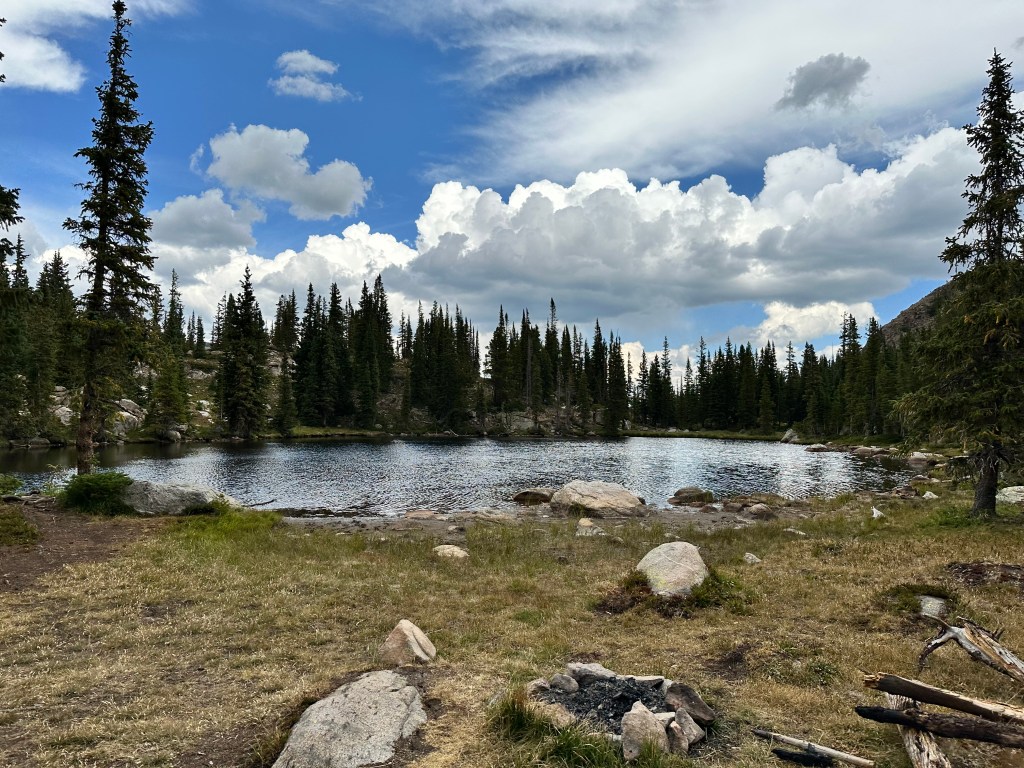
8:00 p.m. I’m sitting on a boulder that’s nestled in a meadow on a 30-degree slope, staring out at the mountains that surround me. All is quiet except for the gentle wind making its way across the landscape. The sun had already gone behind the ridge to my right but the semi-light still allowed me to see for miles.
I sat still for twenty minutes, letting my senses take everything in but thinking about nothing in particular. Just trying to take in the moment. The day had been another grueling one- 17 miles in total, with a spicy climb just to get up to my campsite. A campsite which, by the way, had a beautiful alpine lake right next to it.
This was my reward. A long day of sweating and exertion for this payoff- blissful solitude and a calming sense of being fully present. But it went deeper than that. Every night I was getting a payoff- not just from the hard hiking to get there, but also from the weeks and months that went into my preparation for this experience. As the gloom took over, I slid off the rock and made my way back to my tent.
In my next article, I will write up how my journey on the Colorado Trail transpired: the highs, the lows, and everything in between.
 John Phillips